APST 1.1 · APST 1.2 · APST 1.5 · APST 3.2
Following Curiosity Through Sensory Inquiry
Understanding how toddlers learn through play, sensory exploration and responsive teaching.Understanding how toddlers learn through play, sensory exploration and responsive teaching.
C — Context
During my 0–5 years professional placement in a toddler room (1–2 years), I observed that toddlers learn primarily through sensory exploration, movement, play and everyday interactions. Guided by the EYLF, developmental milestones and children’s emerging interests, I designed open-ended sensory experiences that encouraged curiosity, supported development and extended learning through responsive teaching.
A — Action
Responding to children’s curiosity
Rather than planning activities around predetermined outcomes, I began by observing children’s interests and used these observations to design responsive sensory experiences. Each provocation encouraged children to explore, investigate and learn in their own way.
Example 1: Bee Sensory Inquiry
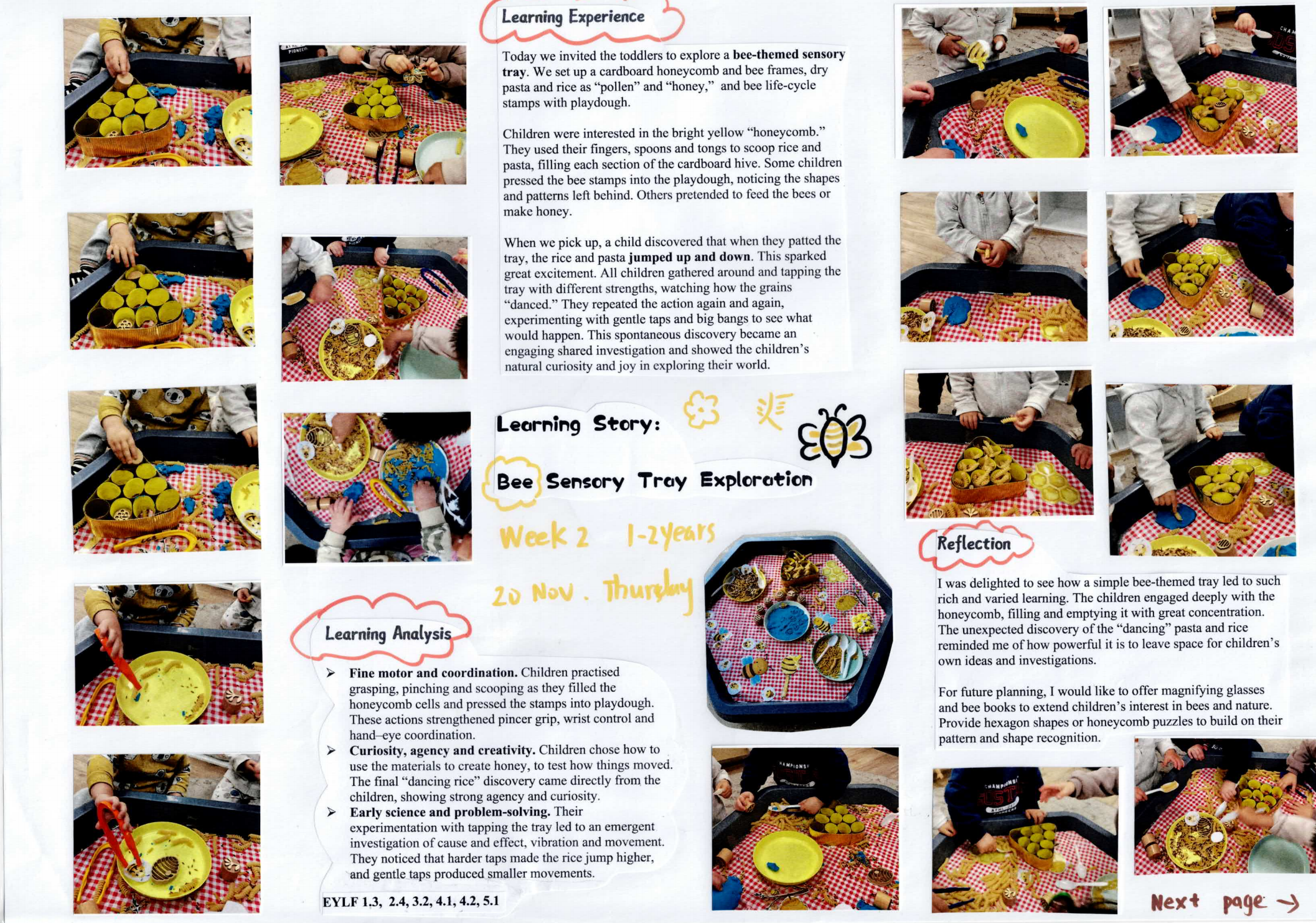
After noticing a toddler’s strong interest in bees and ants outdoors, I created a bee-themed sensory tray using coloured rice, pasta, honeycomb shapes and loose parts. During the activity, a child discovered that tapping the tray made the rice “dance”. Recognising this unexpected discovery, I kept the materials available so the investigation could continue beyond the planned experience.
Example 2: Bear Hunt Sensory Environment
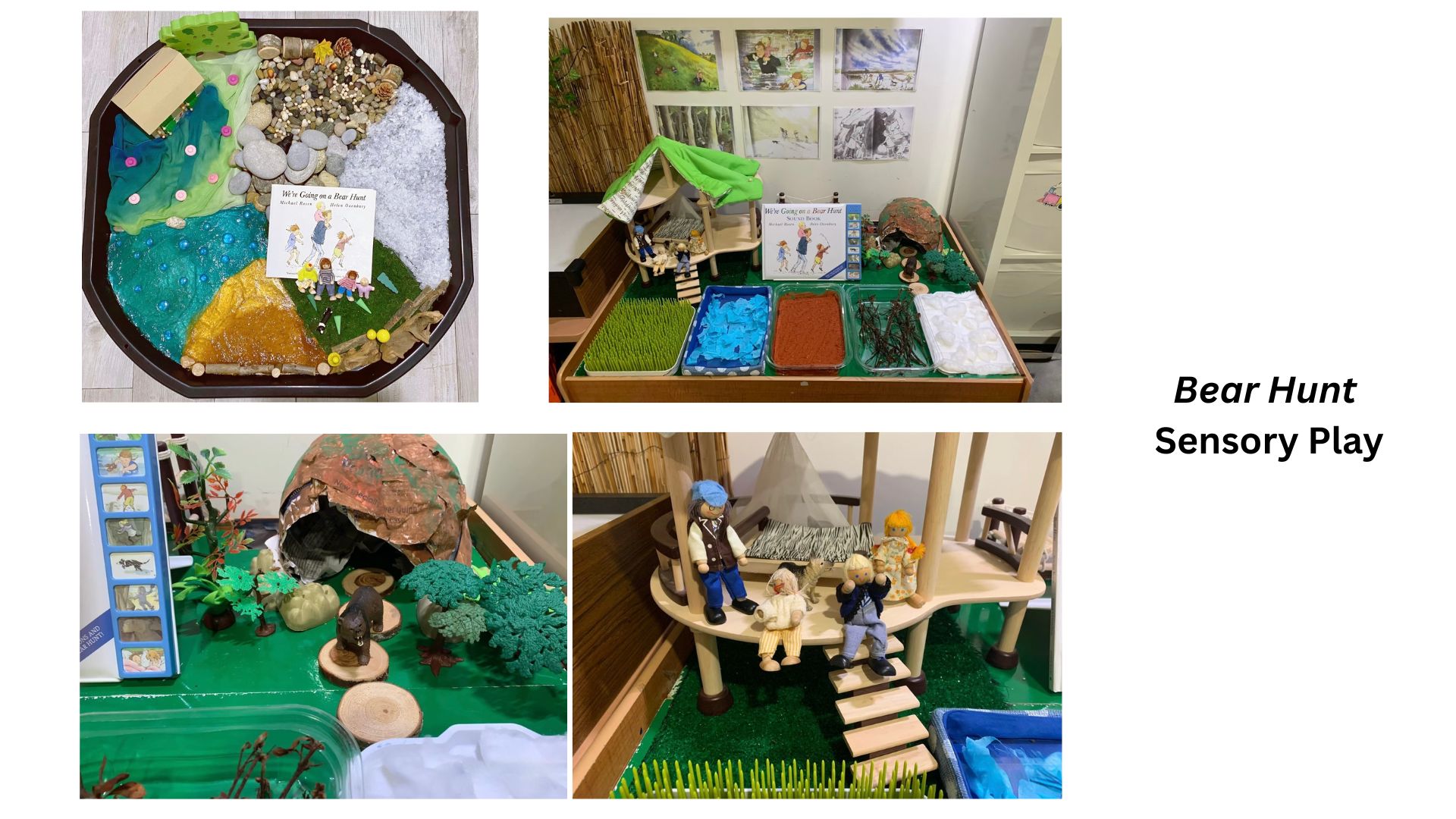
Inspired by *We’re Going on a Bear Hunt*, I recreated the story using natural textures including mud, grass, snow, river and a cave. Children explored each landscape through touch, movement and imaginative play, allowing them to construct meaning through embodied experiences.
Example 3: Bubble Wrap Investigation
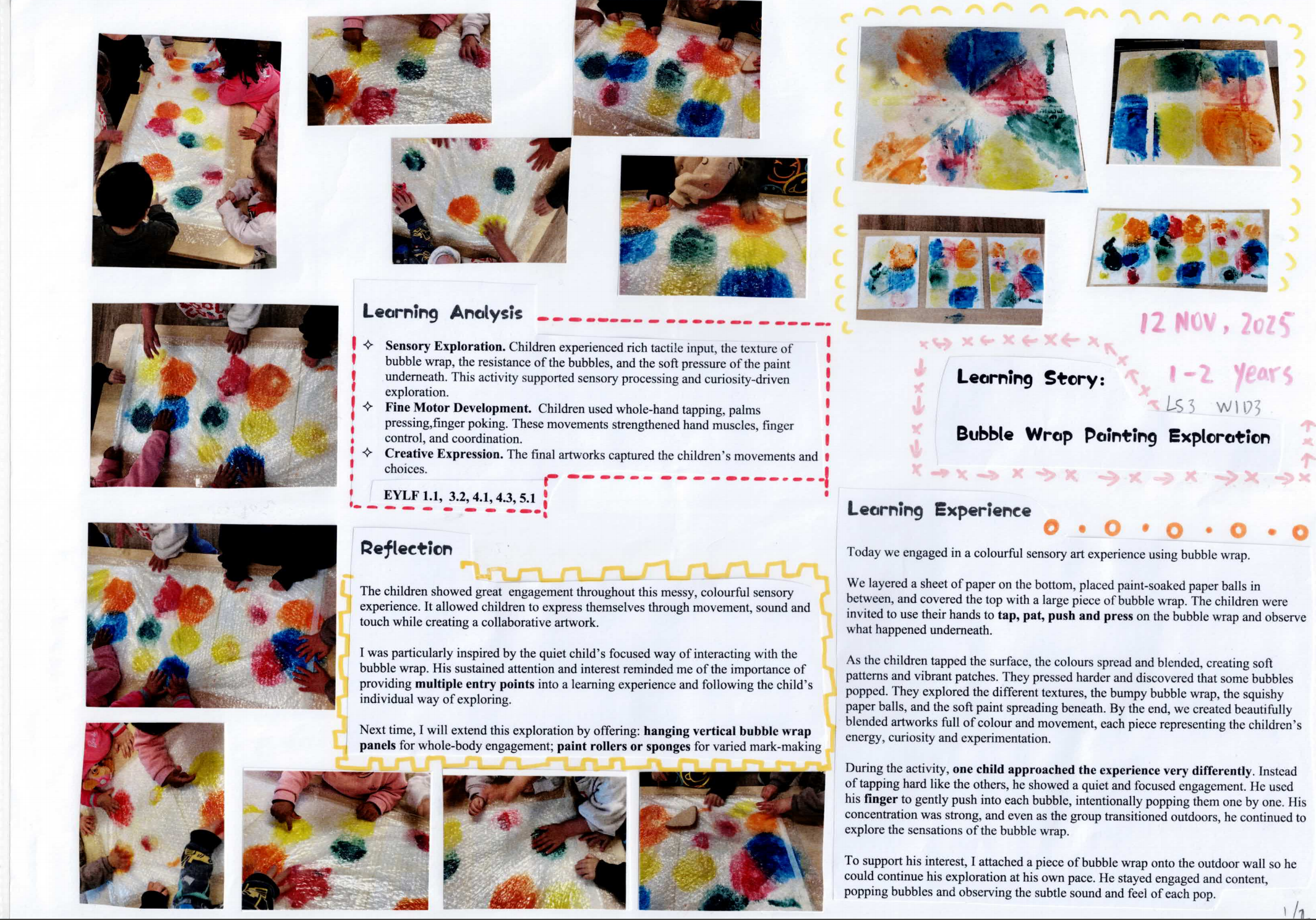
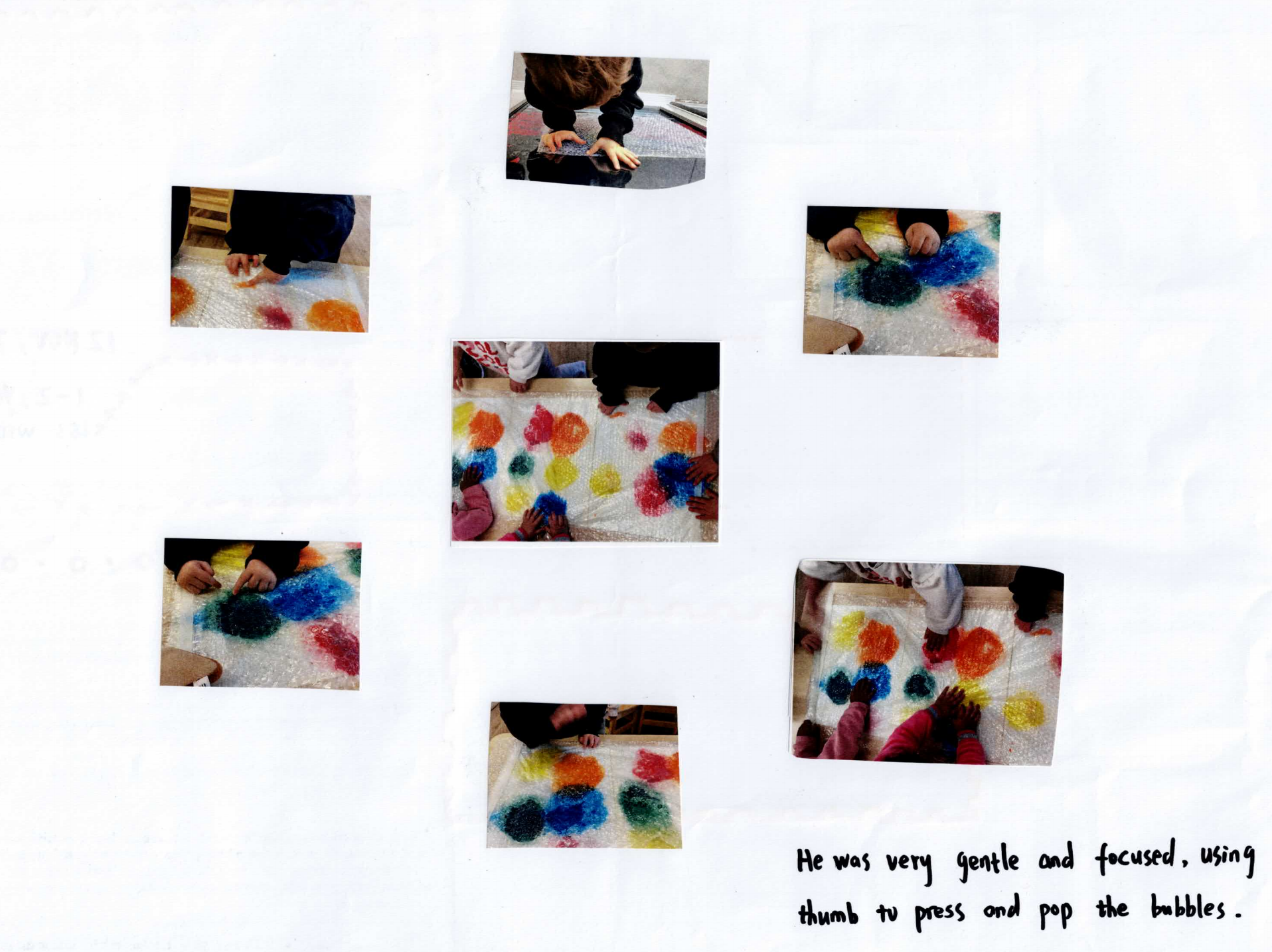
During a collaborative bubble-wrap painting experience, most children enjoyed pressing the paint to create colourful patterns. However, one child spent the entire experience quietly popping the bubbles one by one with his finger. As the group moved outdoors, he was still fully engaged in his exploration. Instead of interrupting his learning, I took the bubble wrap outdoors so he could continue investigating during outdoor play.
R — Results
The sensory experiences encouraged children to explore through touch, movement and curiosity. As they investigated different materials, they developed both fine and gross motor skills while building confidence to experiment and solve simple problems. The activities also supported early language development, with children using and repeating new words such as bee, honey, river and bear during play. Most importantly, the open-ended learning invitations allowed each child to engage, explore and make meaning in their own way.
E — Evaluation
This experience reinforced that effective teaching begins with understanding how children learn, rather than expecting every child to achieve the same outcome. Every child explored the same invitation differently. Looking back, responding to children’s interests and observations created richer learning opportunities than following my original plan. I will continue to use ongoing observation to adapt learning experiences that build on each child’s strengths, interests and development.
S — Standards
Primary Standard
APST 1.2 – Know students and how they learn
Observations of toddlers’ interests, development and learning behaviours informed the design of responsive sensory experiences that supported individual ways of learning.
Supporting Standards
APST 1.1, 1.5, 3.2