APST 1.1 · APST 2.1 · APST 2.2 · APST 2.3 · APST 3.2 · APST 3.3 · APST 5.1
From Story to Curriculum: Integrating Literacy, Numeracy and Inquiry
Using picture books as curriculum anchors for literacy, numeracy, inquiry, social-emotional learning and creative expression.C — Context
During my 0–5 professional placement, I planned and implemented two picture-book-based learning sequences for children aged 3–4 years. Guided by the EYLF, I used *The Very Hungry Caterpillar* and *The Colour Monster* as curriculum anchors rather than treating shared reading as an isolated literacy activity. Each weekly sequence connected story content with literacy, numeracy, inquiry, social-emotional learning, creative arts, fine-motor development and environmental awareness.
A — Action
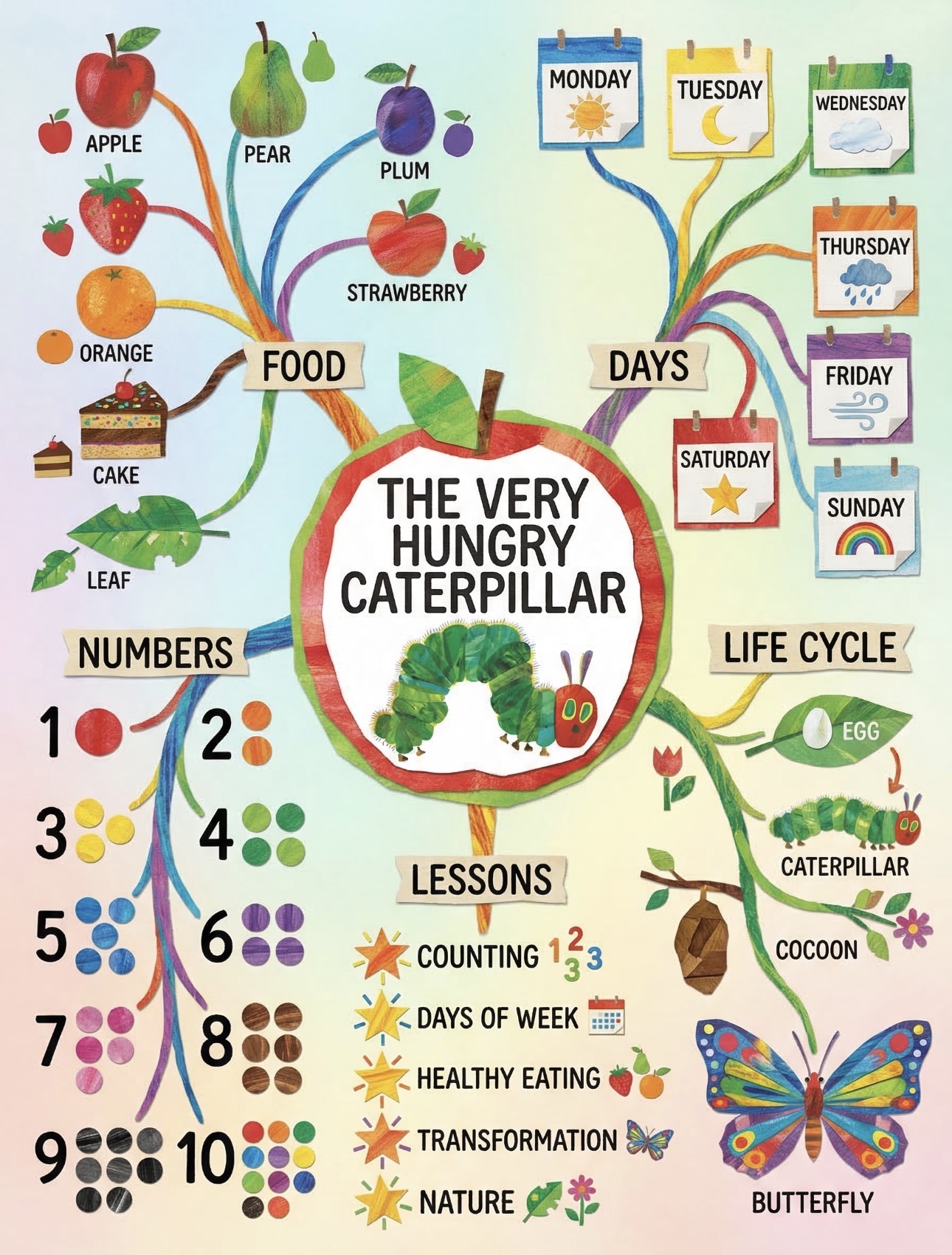
I first identified the core concepts within each story and mapped them across a weekly sequence. For *The Very Hungry Caterpillar*, the content progressed from story retelling and days of the week to counting, life cycles, healthy food choices, creative transformation and outdoor movement. For *The Colour Monster*, the sequence moved from recognising emotions to regulation strategies, cause-and-effect inquiry, counting, retelling and creative emotional expression.
The inquiry integrated:
- literacy through shared reading, vocabulary and story retelling; - numeracy through counting, sequencing and one-to-one correspondence; - inquiry through observing butterflies and discussing life cycles; - wellbeing through conversations about healthy and “sometimes” foods; - creative expression through art and sensory experiences.
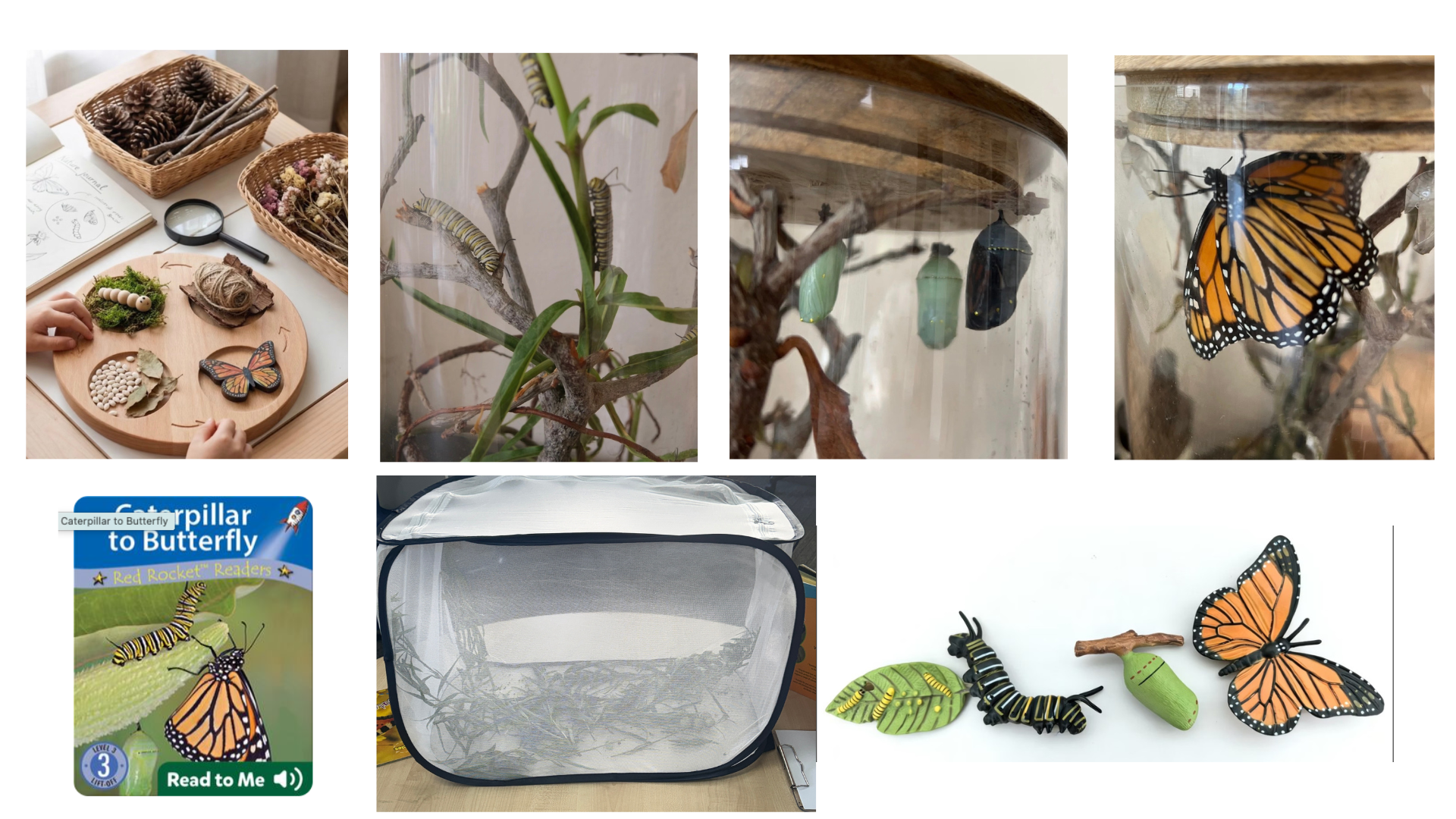
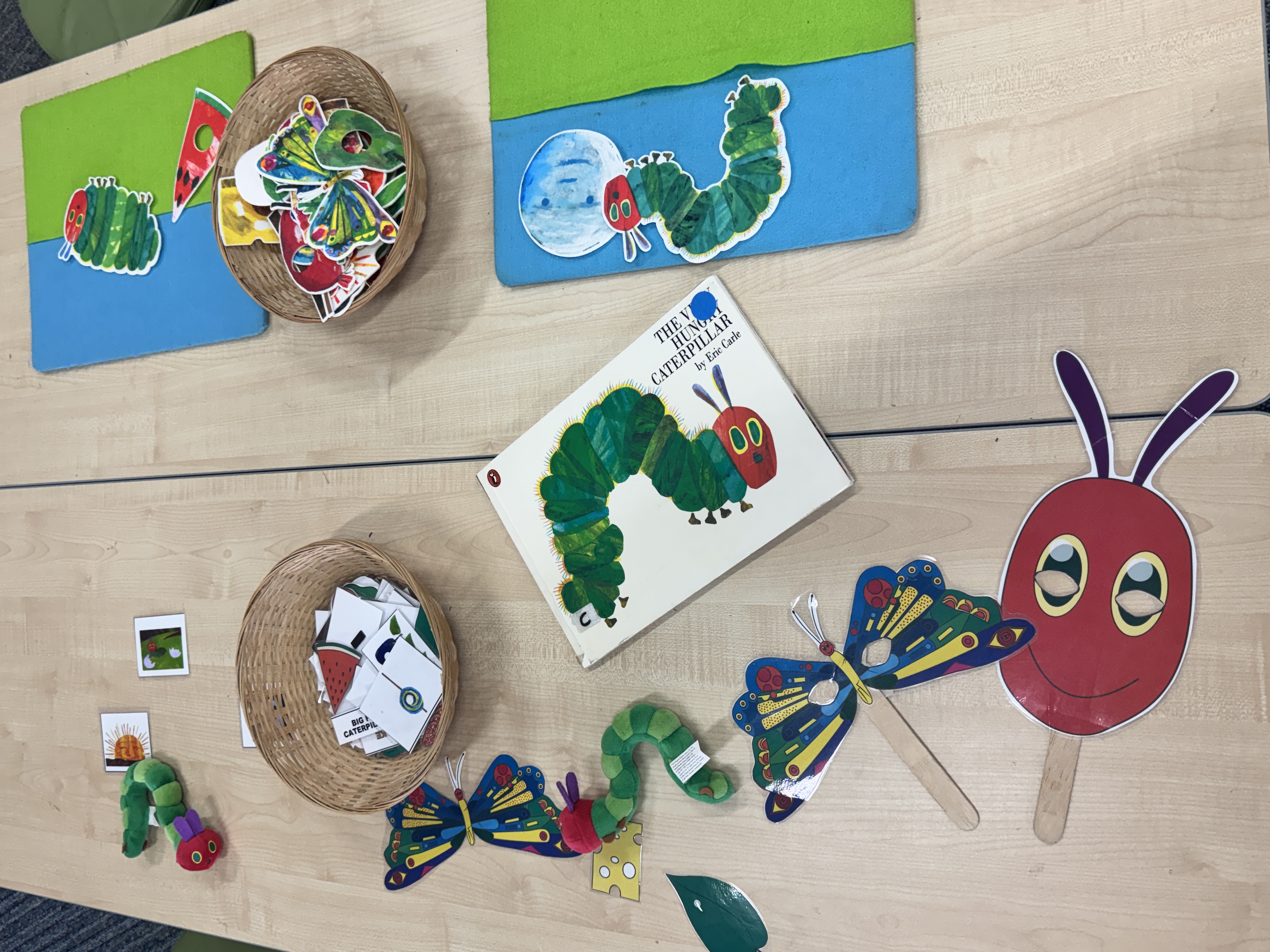
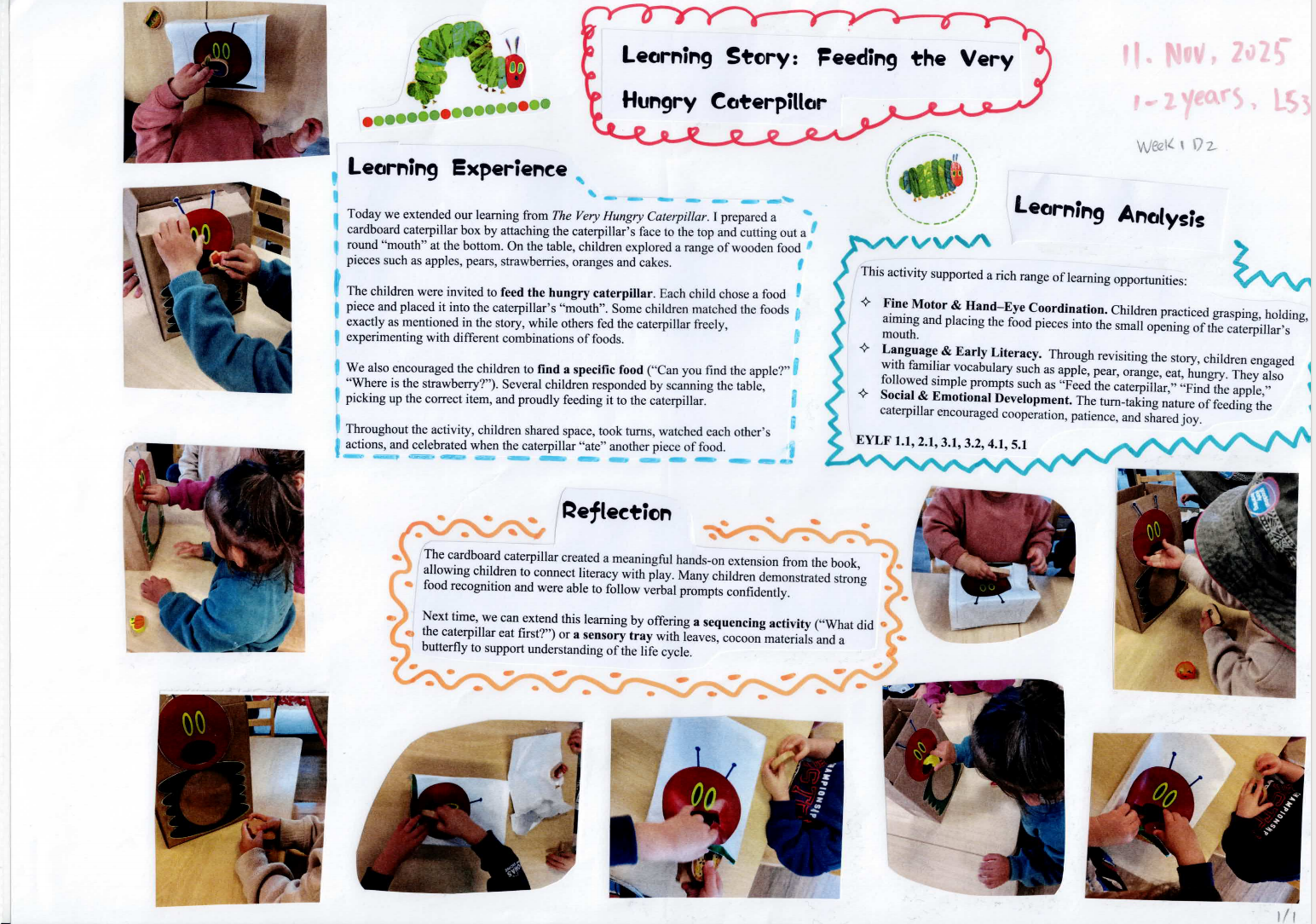
Learning documentation, floor books and learning stories were used to capture children’s thinking and inform the next stage of planning (refer to Figures 2–4).
Instead of following the book page by page, I intentionally transformed one familiar story into a connected curriculum that reflected the holistic principles of the EYLF.
One important professional learning from this experience was recognising that the same text does not require the same pedagogy. Although *The Very Hungry Caterpillar* remained the shared context, the teaching approach changed according to children’s developmental stage.
For children aged 1–2 years, learning focused on large manipulatives, simple food vocabulary, turn-taking and fine-motor exploration through feeding activities.
For 3–4-year-olds, the story expanded into counting, sequencing, healthy eating, inquiry, dramatic play and early life-cycle concepts.
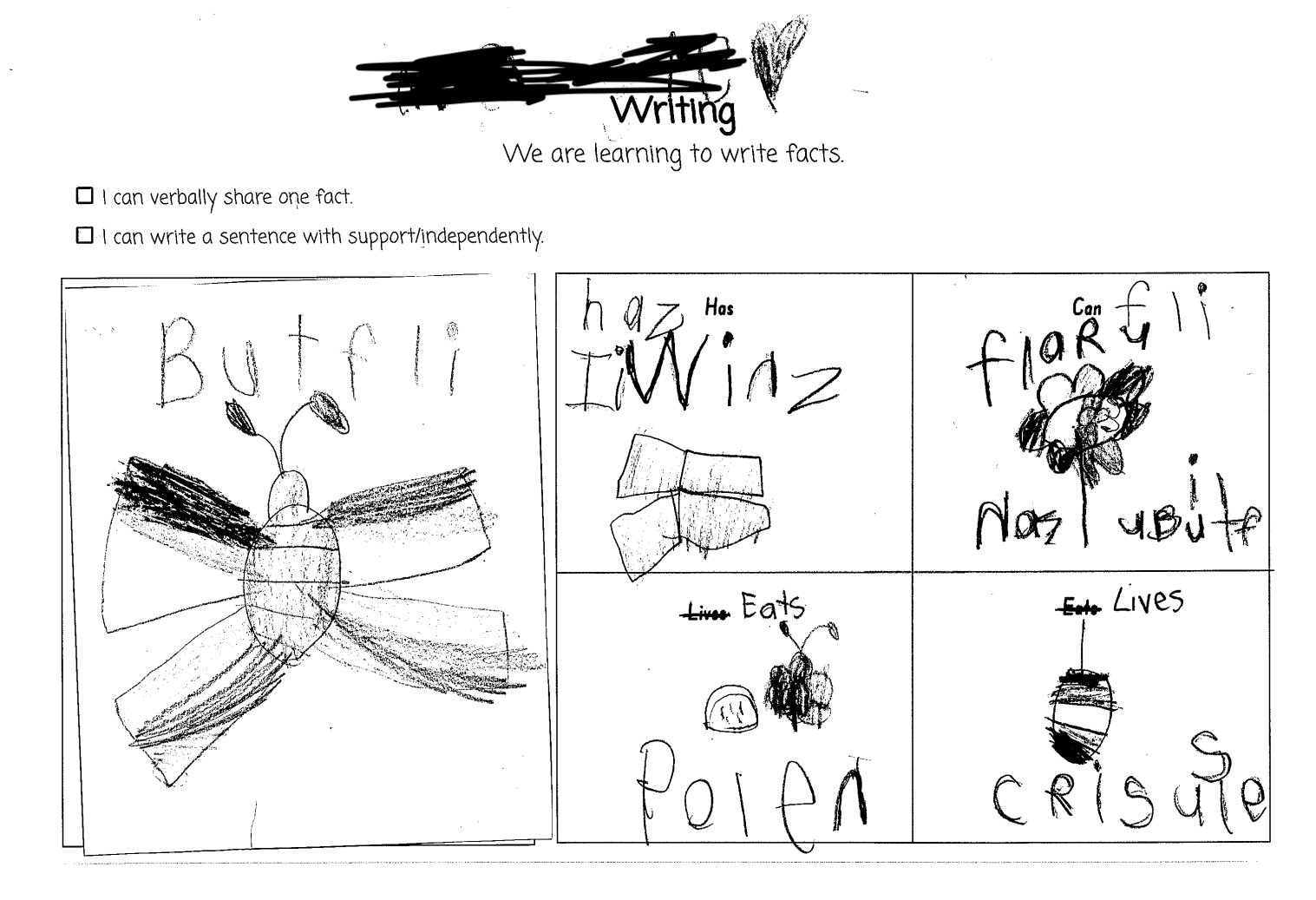
In Reception, the same text became a context for scientific observation, story retelling, labelled diagrams, factual writing and investigating habitats, body parts and butterfly transformation (refer to Figure 5).
R — Results
Children demonstrated strong engagement throughout the inquiry and increasingly connected ideas across different learning experiences rather than treating activities as separate events.
The floor book showed children revisiting earlier conversations, making predictions about butterflies and contributing new questions for investigation. Learning stories and work samples also demonstrated growth in vocabulary, sequencing, counting and confidence when discussing the life cycle.
The integrated approach enabled children to revisit concepts repeatedly through different contexts, supporting deeper understanding and stronger transfer of learning (refer to Figures 2–5).
E — Evaluation
Shulman’s concept of pedagogical content knowledge distinguishes between knowing subject matter and knowing how to represent it in ways that are meaningful to particular learners (Shulman, 1986). This was evident across my use of *The Very Hungry Caterpillar*: the central text remained the same, but the teaching changed across toddler, preschool and Reception contexts. These experiences demonstrated that effective curriculum design requires educators to adapt conceptual depth, materials, language, cognitive demand and expected learning outcomes according to children’s developmental readiness and prior knowledge (refer to Figure 5).
S — Standards
Primary APST Focus
APST 2.1 – Content and teaching strategies
Used a single picture book as a curriculum anchor and adapted teaching approaches across different age groups by changing conceptual depth, language demands, materials and learning outcomes.
APST 2.2 – Content selection and organisation
Selected concepts within one text and organised them into integrated learning experiences including literacy, numeracy, science, health and inquiry.
APST 2.3 – Curriculum, assessment and reporting
Designed EYLF-based experiences that progressively supported children’s understanding and documented learning through floor books and learning stories.
Supporting APST
- APST 1.1 – Physical, social and intellectual development of students - APST 3.2 – Plan, structure and sequence learning programs - APST 3.3 – Use teaching strategies - APST 5.1 – Assess student learning
References
Australian Government Department of Education. (2022). *Belonging, Being and Becoming: The Early Years Learning Framework for Australia* (Version 2.0).
Shulman, L. S. (1986). Those who understand: Knowledge growth in teaching. *Educational Researcher, 15*(2), 4–14.
Available Evidence Assets