APST 1.3 · APST 1.5 · APST 3.5 · APST 4.2 · APST 4.3 · APST 7.3
Beyond Behaviour: Understanding the Need Behind the Behaviour
During my placement in a 3–4-year-old preschool room, I worked closely with Child D, who had recently arrived in Australia and had very limited English. He could not yet communicate many of his needs to educators or understand unfamiliar routines and instructions. Staff alerted me that he frequently cried, shouted, hit or bit when frustrated and sometimes experienced conflict with peers.Primary APST Focus
APST 4.2 – Manage classroom activities
APST 4.3 – Manage challenging behaviour
C – Context
During my placement in a 3–4-year-old preschool room, I worked closely with Child D, who had recently arrived in Australia and had very limited English. He could not yet communicate many of his needs to educators or understand unfamiliar routines and instructions. Staff alerted me that he frequently cried, shouted, hit or bit when frustrated and sometimes experienced conflict with peers.
Because I shared Child D’s home language, I took a leading role in supporting his communication and participation while continuing to work under my mentor’s guidance.
A – Action
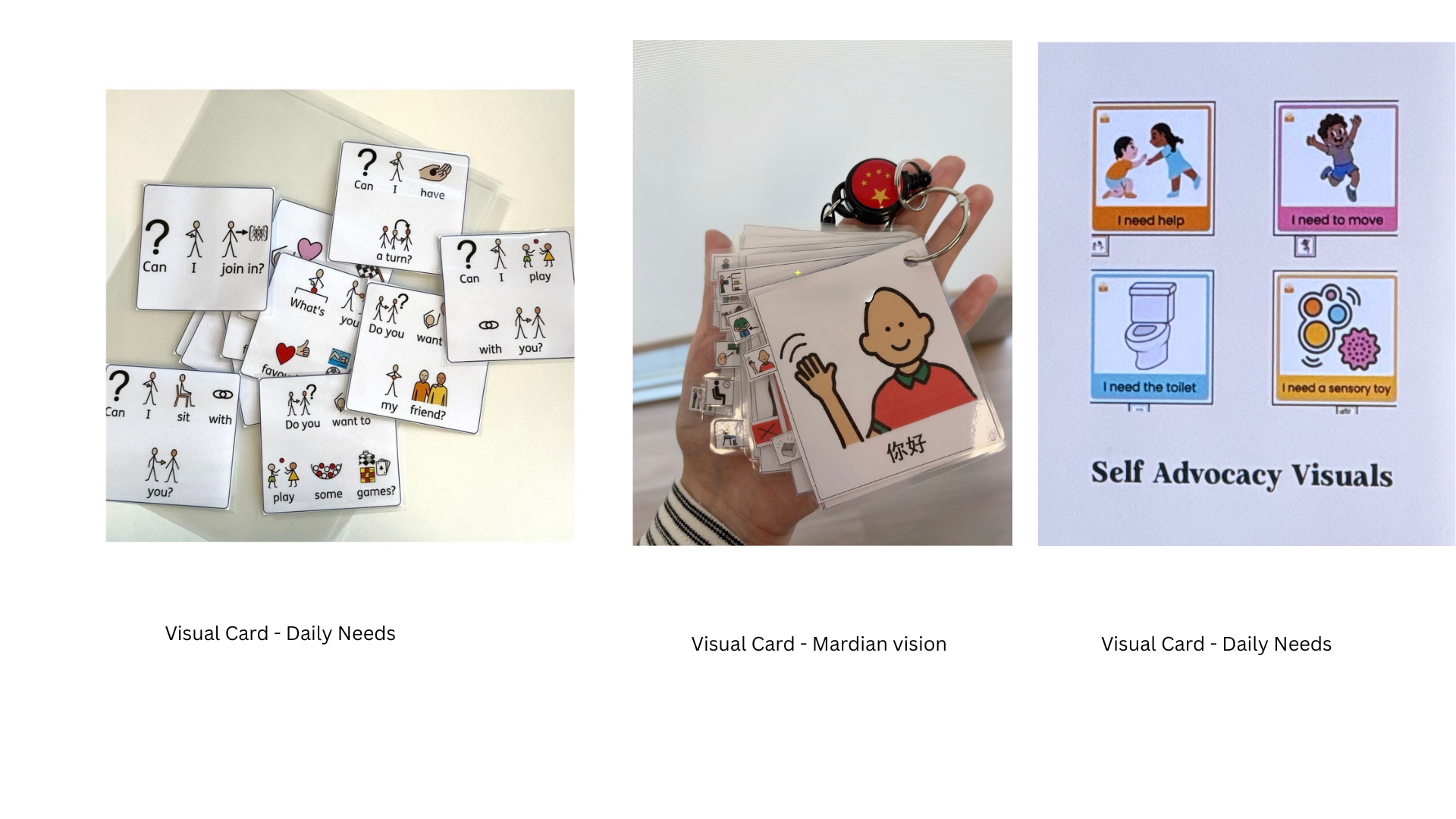
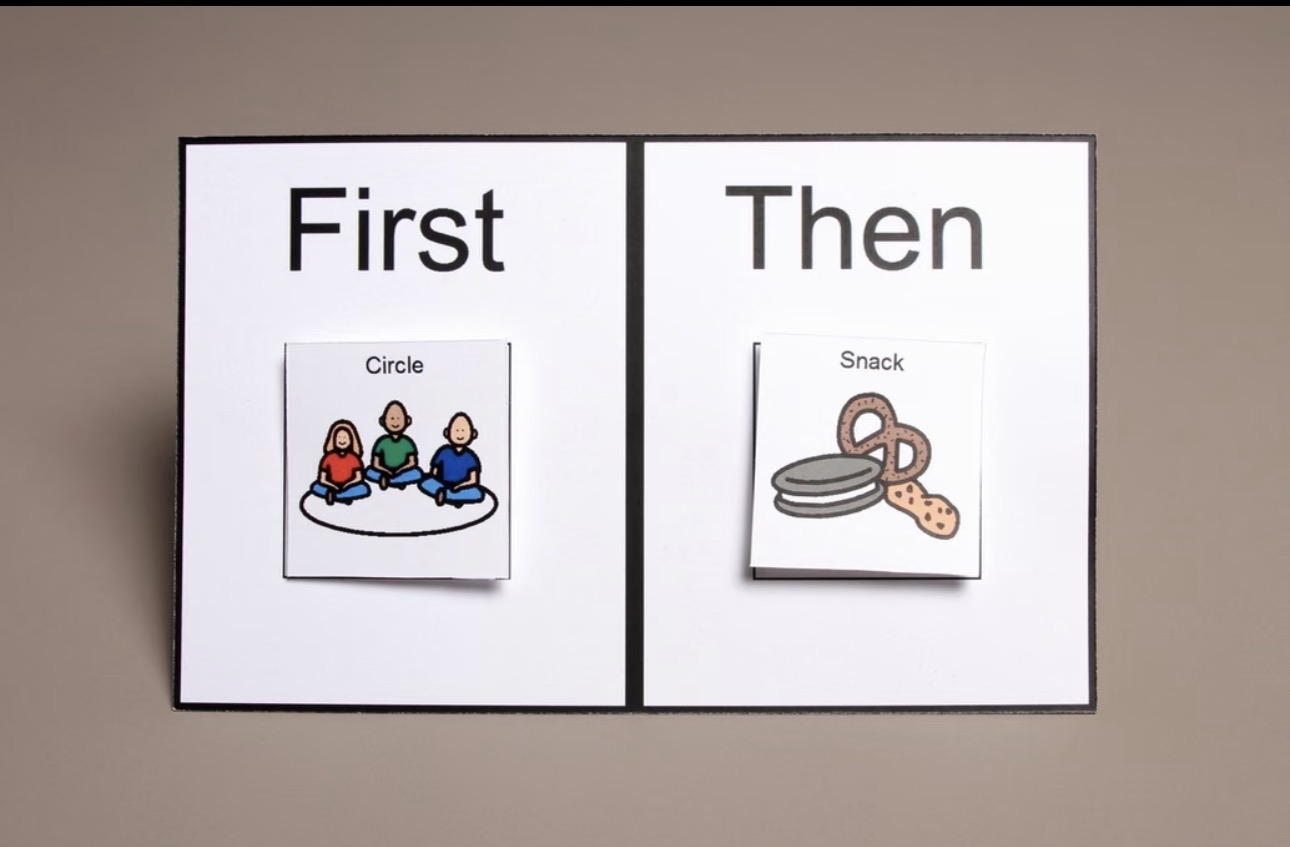
I first discussed Child D’s communication, transition and social needs with my mentor. Together, we identified proactive strategies rather than waiting for incidents to occur. The resulting support pack included visual communication cards, a First–Then board, emotion and calming resources, turn-taking prompts, social stories, replacement-behaviour cues and a home–preschool communication template (refer to Figure 1).
This approach was consistent with the Teaching Pyramid Model, which emphasises nurturing relationships, supportive learning environments, explicit social-emotional teaching and individualised interventions rather than relying primarily on reactive responses to challenging behaviour (Fox et al., 2003).
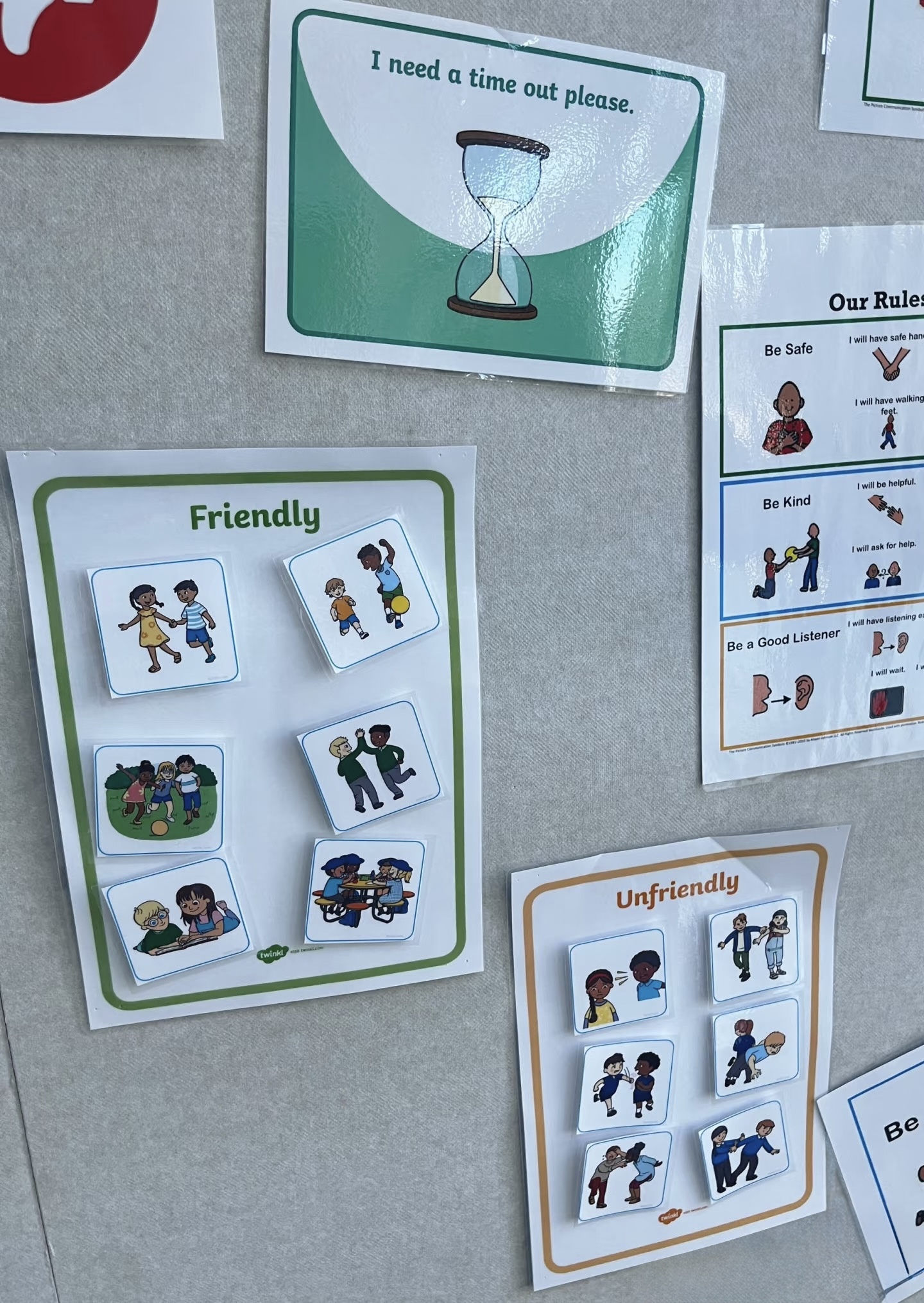
I introduced bilingual communication cards and visual prompts to help Child D express needs and understand daily routines (refer to Figures 2–4). Classroom expectations such as friendly behaviours, taking turns and gentle hands were explicitly taught through visual resources, while First–Then boards increased predictability during transitions.
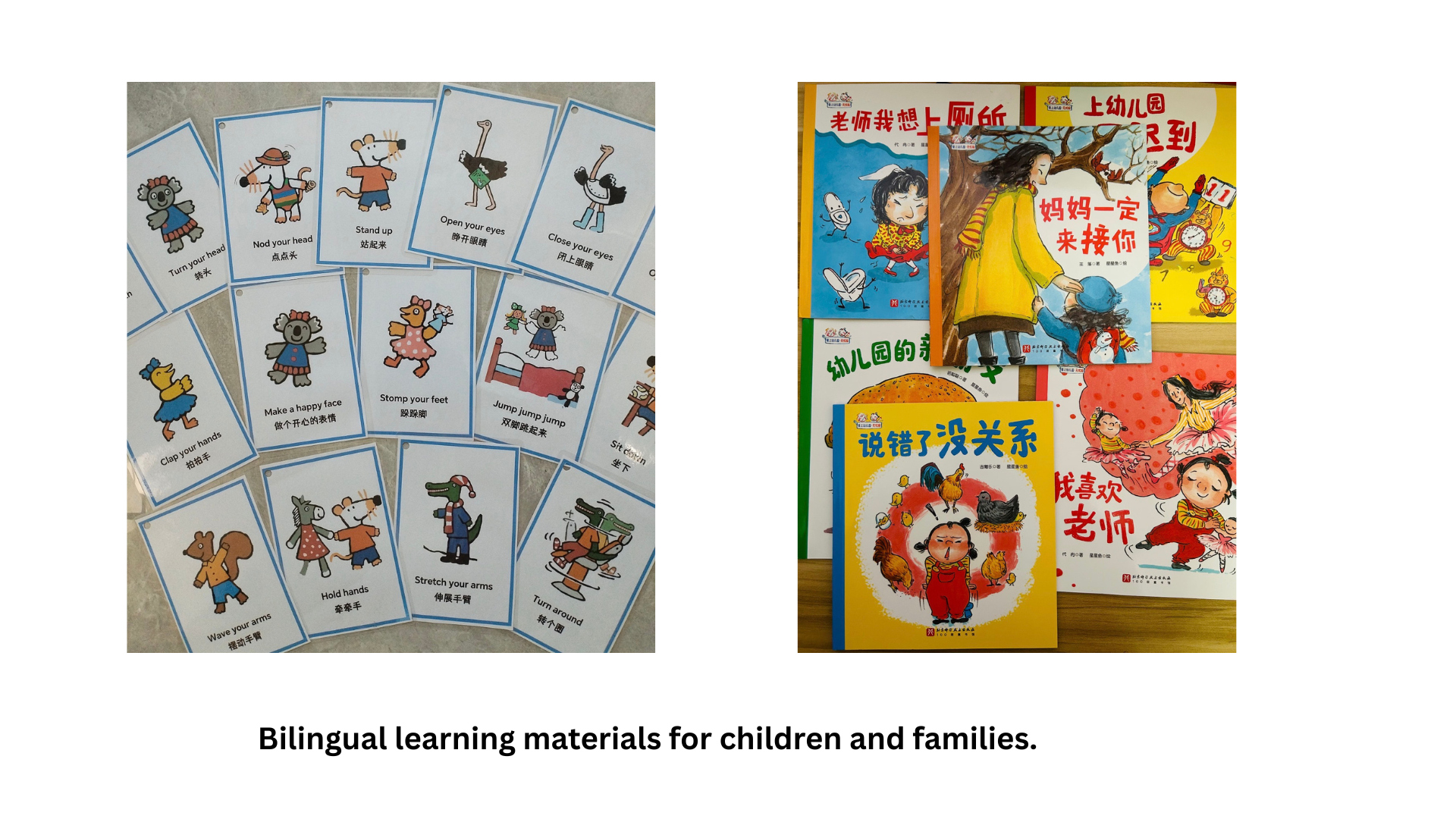
I also communicated regularly with Child D’s family and shared bilingual resources so that consistent strategies could be used across home and preschool (refer to Figure 5).
R – Results
Child D gradually became more settled and required less adult intervention to participate in routines. Crying and peer conflict decreased, while his use of visual supports, gestures and emerging English increased.
A particularly significant change occurred when two children argued over a toy car. Child D comforted the crying child with a hug, exchanged one of his own cars and gave it to the peer. His mother responded that he had previously been the child who made others cry, but was now comforting them. This interaction showed emerging empathy, problem-solving and friendship skills rather than simple compliance. The incident, Child D’s increased group participation and the family’s response were documented in my daily reflection (refer to Figure 6).
E – Evaluation
This experience reinforced that challenging behaviour should be understood as a form of communication rather than simply behaviour to be corrected (Arthur et al., 2024). Child D’s progress demonstrated that when communication barriers, predictable routines and supportive relationships were addressed, the need to express frustration through challenging behaviour decreased.
Working alongside my mentor and the child’s family demonstrated that safe and supportive learning environments are built through consistency, trusting relationships and responsive communication. This experience strengthened my belief that behaviour support should protect children’s dignity while promoting belonging, participation and emotional security.
S – Standards
Primary APST Focus
APST 4.2 – Manage classroom activities
Established predictable routines, visual supports and clear expectations that enabled a child with emerging English to participate safely and confidently in classroom learning.
APST 4.3 – Manage challenging behaviour
Implemented proactive, relationship-based behaviour support strategies in collaboration with my mentor and the child’s family, reducing challenging behaviours while strengthening the child’s self-regulation and social participation.
Supporting APST
APST 1.3 – Students with diverse linguistic, cultural, religious and socioeconomic backgrounds
APST 1.5 – Differentiate teaching to meet the specific learning needs of students
APST 3.5 – Use effective classroom communication
APST 7.3 – Engage with parents/carers
Reference
Arthur, L., Beecher, B., Death, E., Dockett, S., & Farmer, S. (2024). Programming and planning in early childhood settings (8th ed.). Cengage.
Fox, L., Dunlap, G., Hemmeter, M. L., Joseph, G. E., & Strain, P. S. (2003). The teaching pyramid: A model for supporting social competence and preventing challenging behavior in young children. Young Children, 58(4), 48–52.