APST 1.1 · APST 1.2 · APST 3.1 · APST 3.2 · APST 5.1 · APST 5.2
Assessment-Informed Planning for Individual Progress
Using the EYLF planning cycle to assess, respond to and monitor a child’s fine motor and numeracy developmentUsing the EYLF planning cycle to assess, respond to and monitor a child’s fine motor and numeracy development
Primary focus: APST 5.1 Supporting focus: APST 1.1, 1.2, 3.1, 3.2, 5.2
C-Context
During my preschool placement, I used the EYLF Planning Cycle to assess and support the learning of a focus child (Child M). The EYLF describes assessment as an ongoing process of observing, analysing and using evidence to inform responsive teaching (AGDE, 2022). An initial anecdotal record identified emerging fine motor control and inconsistent one-to-one counting, while also recognising the child’s persistence and willingness to participate (refer to Figure 1; APST 1.1, 5.1).
A follow-up observation during the first week provided additional evidence of Child M’s progress and highlighted the need for further support with counting accuracy and tool control (refer to Figure 2; APST 1.2, 5.1).
Figure 1. Initial anecdotal observation identifying Child M’s strengths, learning needs and next learning priorities.
Preview PDFFigure 2. Follow-up anecdotal observation documenting ongoing assessment and informing the next stage of planning.
Preview PDFA-Action
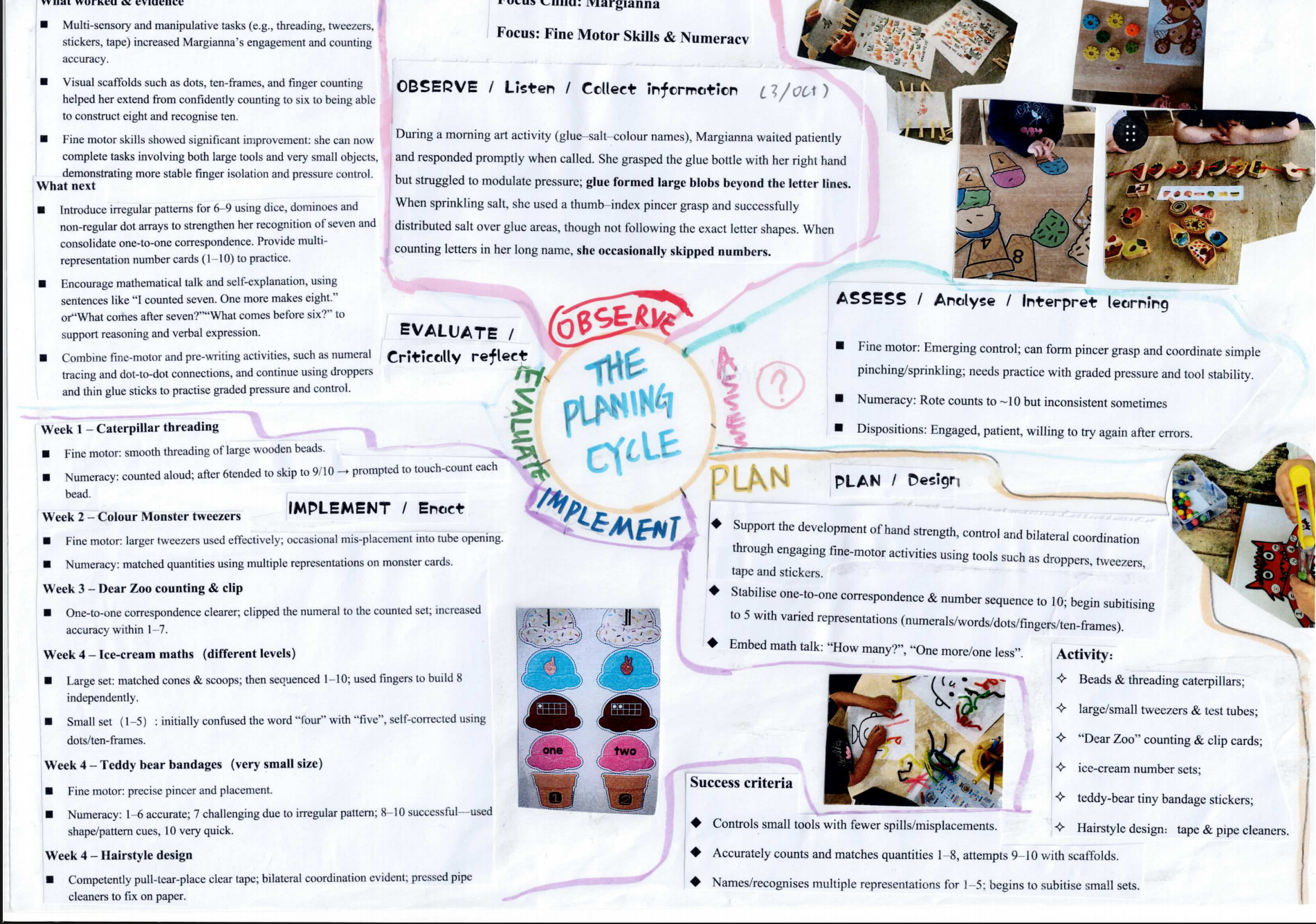
Using these observations, I identified two learning priorities: improving fine motor control and strengthening early numeracy. I analysed the evidence through the EYLF Planning Cycle and established clear learning goals, success criteria and targeted teaching strategies (refer to Figure 3; APST 3.1, 5.1).
Drawing on formative assessment principles (Black & Wiliam, 2009), I designed a sequence of learning experiences that gradually increased the level of challenge. Activities such as caterpillar threading, tweezers, counting games, teddy bear bandages and creative fine motor tasks provided multiple opportunities to practise the same learning goals in different contexts (refer to Figure 4; APST 3.2, 5.2).
Throughout the learning cycle, observations were used to adjust the level of support, materials and questioning rather than waiting until the end of the program.
Figure 3. EYLF Planning Cycle showing how assessment evidence informed learning goals, planning and ongoing evaluation.
Preview PDF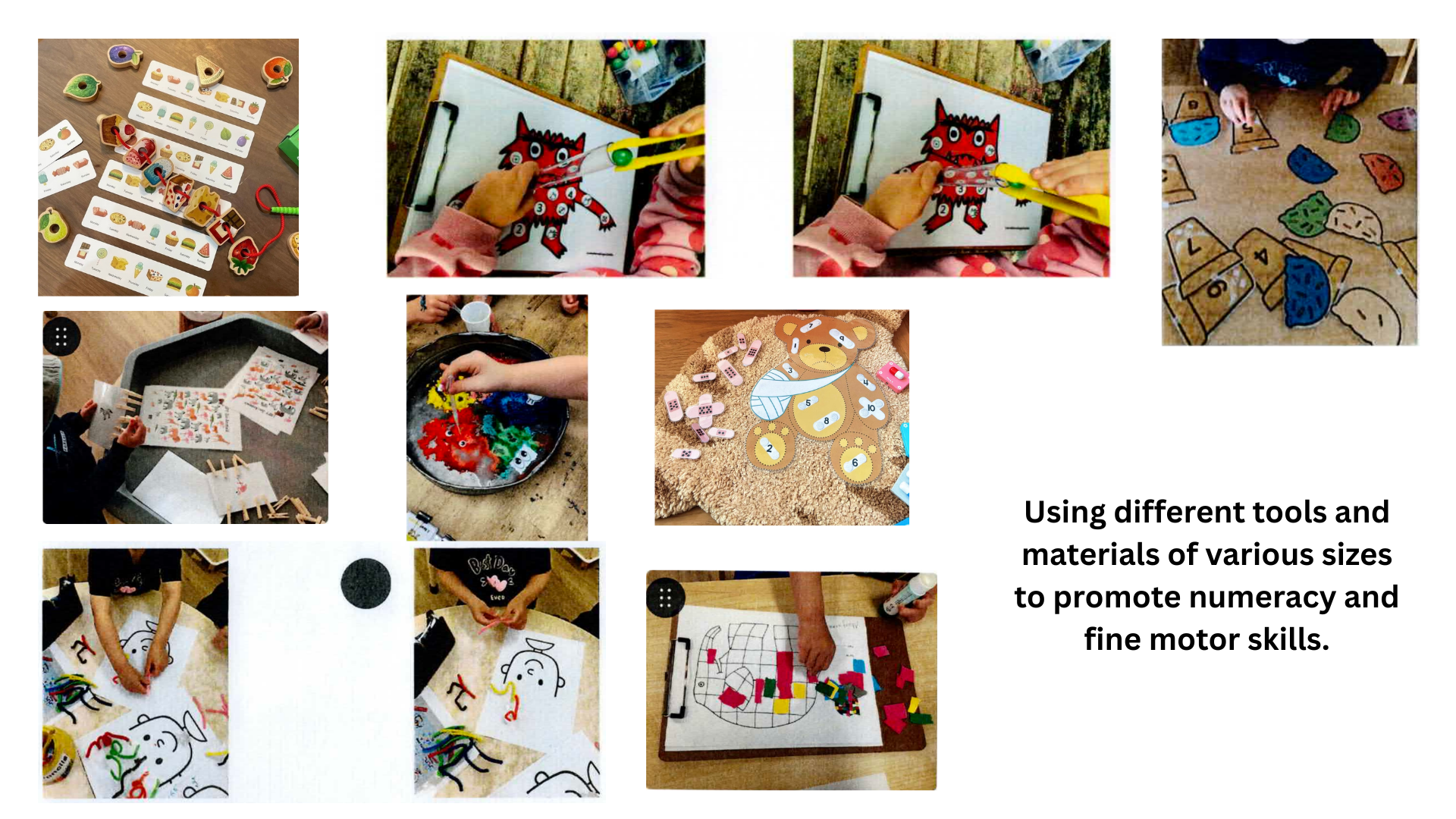
R-Results
Ongoing assessment showed measurable progress across the four-week learning cycle. Child M demonstrated improved finger strength and control by using increasingly smaller tools with greater accuracy. Counting also became more consistent, progressing from occasional skipped numbers to independently counting from one to ten with accurate one-to-one correspondence. Work samples and observation records confirmed that assessment evidence informed both planning and children’s learning progress (refer to Figure 5; APST 5.1, 5.2).
E-Evaluation
This experience strengthened my understanding that assessment is most valuable when it guides teaching rather than simply measuring learning. Regular observations, targeted feedback and ongoing adjustments allowed teaching decisions to remain responsive to the child’s development. It reinforced my belief that effective assessment is a continuous cycle of observe, plan, teach, assess and respond, ensuring that learning experiences remain purposeful and developmentally appropriate (AGDE, 2022).
S-Standards
Primary APST Focus
APST 5.1 – Assess student learning Designed and implemented ongoing assessment strategies using anecdotal observations, work samples and the EYLF Planning Cycle to identify learning needs and monitor children’s progress.
APST 5.2 – Provide feedback to students on their learning Used formative feedback, questioning and responsive scaffolding to support children’s next steps and adjust teaching throughout the learning cycle.
Supporting APST
APST 1.1 – Physical, social and intellectual development and characteristics of students
APST 1.2 – Understand how students learn
APST 3.1 – Establish challenging learning goals
APST 3.2 – Plan, structure and sequence learning programs